Address
304 North Cardinal St.
Dorchester Center, MA 02124
Work Hours
Monday to Friday: 7AM - 7PM
Weekend: 10AM - 5PM
Address
304 North Cardinal St.
Dorchester Center, MA 02124
Work Hours
Monday to Friday: 7AM - 7PM
Weekend: 10AM - 5PM

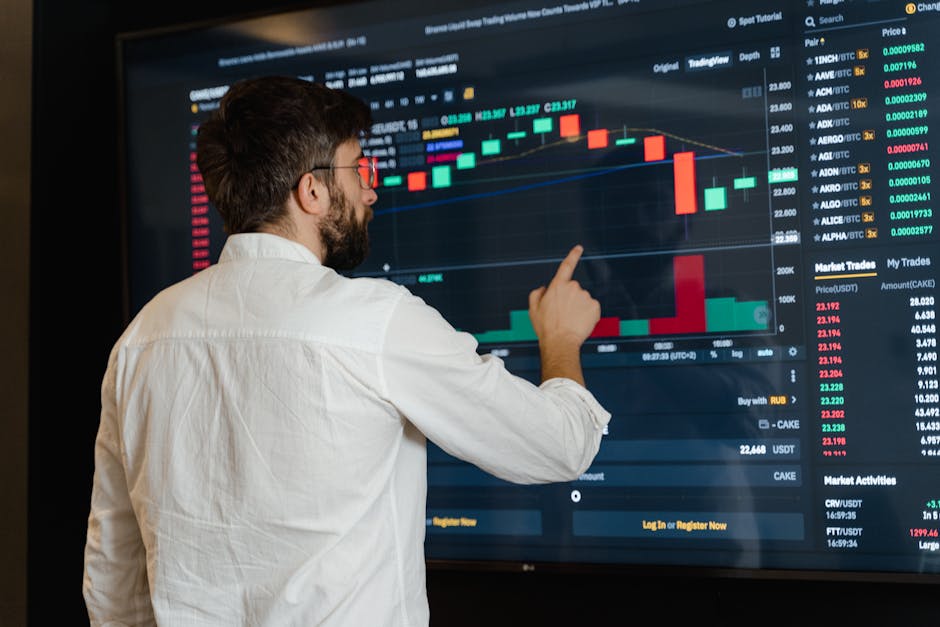
In electronic trading, speed determines profit or loss. High-frequency execution infrastructure reduces latency to microseconds, enabling traders to react to market movements faster than competitors. A modern financial trading platform must deploy co-location servers, kernel bypass technologies, and optimized network stacks to shave off milliseconds. Even a 10-microsecond delay can cause slippage on high-volatility assets like cryptocurrencies or major forex pairs.
Infrastructure includes FPGA-based hardware for order processing and direct market access (DMA) to exchanges. Without these, algorithms face queue congestion and stale pricing. Firms investing in dedicated fiber optics and microwave links gain an edge in arbitrage strategies. The cost of building such systems is high, but the return comes from capturing spreads that slower participants miss.
Exchange matching engines prioritize orders by arrival time. High-frequency execution infrastructure ensures your orders hit the queue first. This is critical for scalping strategies where a few ticks per trade compound into significant gains. Platforms that lack low-latency routing often see partial fills or rejections during rapid price changes.
Large orders move markets. Execution infrastructure with smart order routing (SOR) splits trades across venues to minimize footprint. Algorithms like VWAP or TWAP rely on real-time data feeds and low-latency execution to avoid adverse selection. When infrastructure lags, the market moves against the order before it completes, eroding returns.
Advanced platforms use colocation at major data centers (e.g., NY4, LD4) to cut physical distance. This reduces propagation delay to under 100 microseconds. Combined with predictive analytics, the system anticipates liquidity gaps and adjusts order placement dynamically. Traders who ignore infrastructure quality face higher transaction costs and reduced fill rates.
High-frequency execution infrastructure must be fault-tolerant. Redundant power supplies, network paths, and backup matching engines prevent downtime during critical trading sessions. A single second of outage in high-frequency trading can result in thousands of dollars in missed opportunities or erroneous positions.
Risk checks are embedded directly into the execution pipeline. Pre-trade limits, kill switches, and real-time position tracking run at hardware level to prevent runaway algorithms. Platforms that skip these safeguards expose clients to regulatory fines and capital loss. The best infrastructure balances speed with compliance, ensuring orders are both fast and safe.
Co-location places trading servers physically close to exchange matching engines, reducing round-trip latency to microseconds, which is essential for arbitrage and market-making.
Kernel bypass allows applications to send network packets directly to the NIC, bypassing the operating system’s kernel, cutting latency by 50-80% compared to standard TCP/IP stacks.
Yes, through platforms that offer DMA and low-latency routing, retail traders reduce slippage and get better fills, especially during news events or volatile sessions.
What is the role of FPGA in trading infrastructure?FPGAs process orders at hardware speed, handling thousands of messages per microsecond with deterministic latency, outperforming software-based solutions for simple order logic.
It directly impacts strategy performance: faster execution captures more favorable prices, reduces market impact, and allows algorithms to react to changing liquidity in real time.
Alex K.
Switched to a platform with co-located servers. My fill rate improved by 30% and slippage dropped. The difference in execution quality is night and day for scalping.
Maria L.
I run a crypto arbitrage bot. Without low-latency infrastructure, my trades were consistently late. Now with FPGA-based routing, I capture spreads other bots miss.
James T.
As a prop trader, I can’t afford downtime. This platform’s redundant infrastructure kept me trading during a major exchange outage. Reliability is as important as speed.
